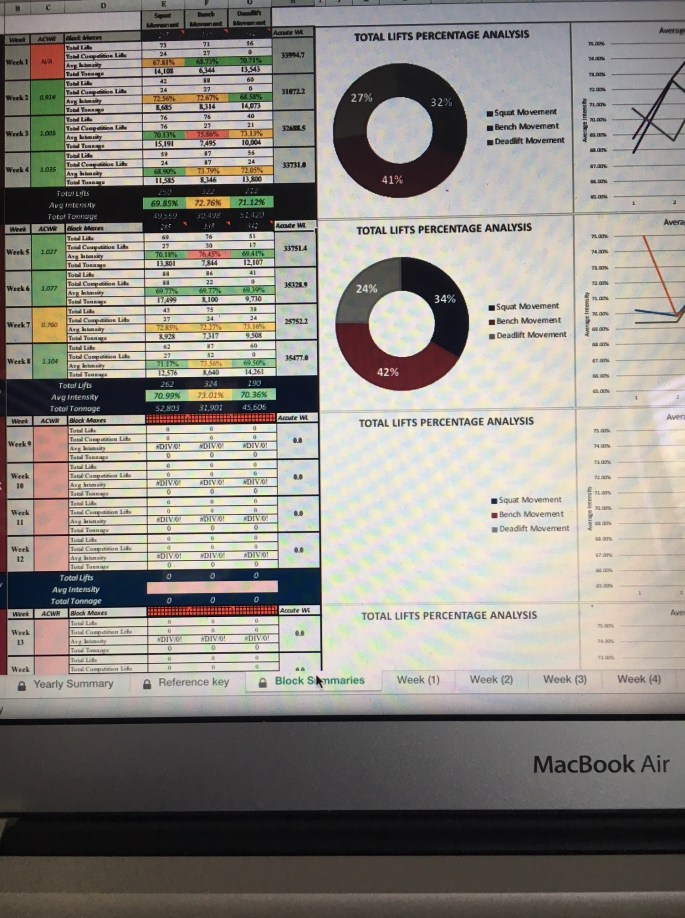
Written by: Kevin Cann We all know that progressive overload is important to getting stronger. We know we have to do more than we did before in order to get stronger. However, this is not an exact science and there are still many questions that coaches can have when trying to write programs. Overload … Continue reading ACWR and Progressive Overload
Tag: coaching
Task Constraints in Powerlifting: Where Variation Meets Specificity
Written by: Kevin Cann In the 1960s, a Russian scientist named Bernstein warned against splitting up the neurophysiology and biomechanical aspects of movement. He explained that each does not exist without the other. Fast forward to modern day and almost all of our research is either or. The majority of the research that … Continue reading Task Constraints in Powerlifting: Where Variation Meets Specificity
Where I May Disagree with Sheiko on Technique
Written by: Kevin Cann I have written quite a bit about the importance of technique recently and in the past. My knowledge of skill acquisition has grown over the last few years and as I learn more, I realize I may have been incorrect in my understandings and how I was implementing it. … Continue reading Where I May Disagree with Sheiko on Technique
Self-Organizing Technique Doesn’t Mean Lifting Technique Doesn’t Matter
Written by: Kevin Cann A little over 3 years ago I started powerlifting. I was fortunate enough to have one of the greatest coaches of all-time as my coach. From day 1 with Boris Sheiko technique was drilled into me as being the most important aspect of training. I did not understand what this … Continue reading Self-Organizing Technique Doesn’t Mean Lifting Technique Doesn’t Matter
Fixing Technique is More Complex Than You Think
Written By: Kevin Cann I was reading Sheiko’s book this week. If you have not picked it up, I highly recommend it. It is a very thorough write up on the technique and programming for the sport of powerlifting. I was coached by him for 3 years. However, my knowledge base at the … Continue reading Fixing Technique is More Complex Than You Think